Venue
ICCC’26 will take place in Coimbra, Portugal from June 29rd to July 3th, 2026.
- About Coimbra
- A little bit of history
- A must-do list
- How to get to Coimbra
- Conference Venue
- Accommodation
About Coimbra
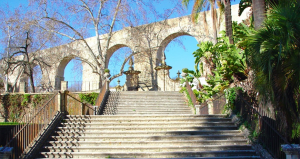
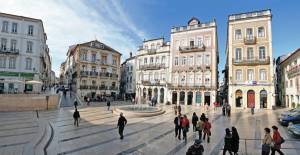
Coimbra has a charm all its own! Nestled along the banks of the Mondego River, the city is the product of a rich history and the fond memories of the many thousands of students who, scattered across the world, still recall the carefree, hopeful days of their youth at Coimbra’s ancient University — one of the oldest in Europe and a UNESCO World Heritage Site. Conveniently positioned about 130 km south of Porto and 200 km north of Lisbon, with easy access by major railway lines, Coimbra once served as Portugal’s capital during the early Middle Ages. Today, it remains one of the country’s most historically layered and culturally vibrant cities — a true intellectual heart of central Portugal.
A little bit of history
Though prehistoric traces are few, they testify to an early human presence on the site of modern Coimbra. The Roman cryptoporticus, preserved beneath the former Bishop’s Palace — now the National Museum Machado de Castro — offers a glimpse into its ancient origins.
Following the fall of the Roman Empire, the city saw successive waves of Vandals, Suevi, Alans, and Visigoths, each shaping its evolving character. In 711, Coimbra came under Moorish rule, remaining an Islamic city for more than three centuries, punctuated by brief Christian reoccupations. The final Reconquest in 1064, led by Ferdinand the Great, transformed Coimbra into a strategic meeting point between the Muslim south and the Christian north, fostering a thriving Mozarabic community and a rich cultural synthesis.
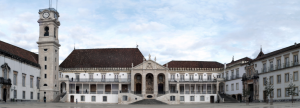
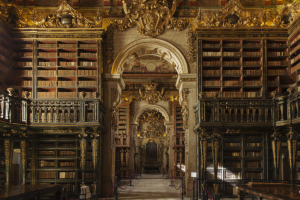
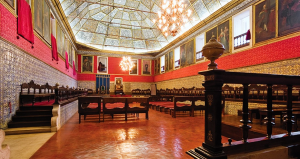
From 1139 until 1260, Coimbra served as the capital of Portugal, a period that saw the birth of six medieval kings. In 1290, Portugal’s first university was founded in Lisbon and later transferred permanently to Coimbra in 1537, becoming the renowned Universidade de Coimbra. Its chapel, adorned with a magnificently carved Renaissance door , and its Baroque library, the Biblioteca Joanina, stand among the most remarkable symbols of learning and art in Europe. The library’s collection includes nearly one million volumes and 3,000 manuscripts, among them a first edition of Luís de Camões’s Os Lusíadas.
In the 18th century, the Marquis of Pombal’s university reforms ushered in a new academic era, strengthening Coimbra’s prominence in the Natural and Experimental Sciences. The 19th century brought urban expansion, while the 20th century saw the development of new university campuses — Polo II for Science and Technology, and Polo III for Life Sciences — extending the city’s influence and modern academic landscape.
Nowadays, the University of Coimbra – Alta and Sofia is recognized as a UNESCO World Heritage Site, honoring its global role in the creation and dissemination of knowledge. Over the centuries, it has absorbed and reflected the cultural, artistic, and intellectual influences of the Portuguese-speaking world, becoming a living testament to Portugal’s Age of Discoveries and its enduring contributions to the arts, sciences, law, architecture, and urban design.
A Must-Do List
When visiting Coimbra, make sure not to miss these highlights:
-
Explore the University Hill — Visit the hilltop campus of the University of Coimbra, a symbol of Portuguese culture and learning.
-
Admire the Biblioteca Joanina — Step inside one of the most beautiful Baroque libraries in the world, rich with history and ornate craftsmanship.
-
Wander through the Botanical Garden — Founded in 1773, it offers a lush collection of rare plant species and a serene, romantic atmosphere.
-
Discover the Science Museum — Visit the historic Chemistry and Physics buildings, which house 18th- and 19th-century scientific instruments.
-
Visit the Machado de Castro National Museum — Built over the Roman cryptoporticus, it features exceptional art and sculpture collections.
-
See the Old Cathedral (Sé Velha) — A 12th-century Romanesque masterpiece that stands as one of the city’s oldest and most striking monuments.
-
Stroll through downtown Coimbra — Pass under the Almedina Arch, explore narrow medieval streets, and soak in the city’s timeless atmosphere.
-
Relax by the Mondego River — Enjoy the tranquil Parque Verde do Mondego or Dr. Manuel Braga Park, with restaurants, bars, and the scenic Pedro and Inês pedestrian bridge.
-
Feel the romance at Quinta das Lágrimas — Discover the legendary love story of Pedro and Inês, immortalized in Portuguese history and poetry.
-
Experience local food and music — Taste regional dishes like chanfana and suckling pig, and listen to the soulful strains of Fado de Coimbra.
How to get there
Coimbra is easily reached from Portugal’s two main international gateways: Francisco Sá Carneiro Airport (Porto) and Humberto Delgado Airport (Lisbon) — both within about two hours by train or car. Frequent rail services make Coimbra a convenient and unforgettable stop on any journey through Portugal. Check all schedules at the the website of Comboios de Portugal.
Conference Venue
We’re still exploring the perfect spot to host this event — and Coimbra has plenty of charming options! Stay tuned — we’ll announce the venue as soon as it’s confirmed.
Accommodation
Looking for a place to stay? Don’t worry — we’re curating a list of nearby hotels and guesthouses for participants. Details will be available here soon!